What Makes a Condo Website Compliant in Florida?
July 4, 2025
What Makes a Condo Website Compliant in Florida?
Table of Contents
- Who Is Legally Required to Have a Website in 2025
- What HB 913 Changes in 2026
- What Documents Must Be Posted
- How to Build a Compliant Condo Website
- Final Thoughts
Who Is Legally Required to Have a Website in 2025
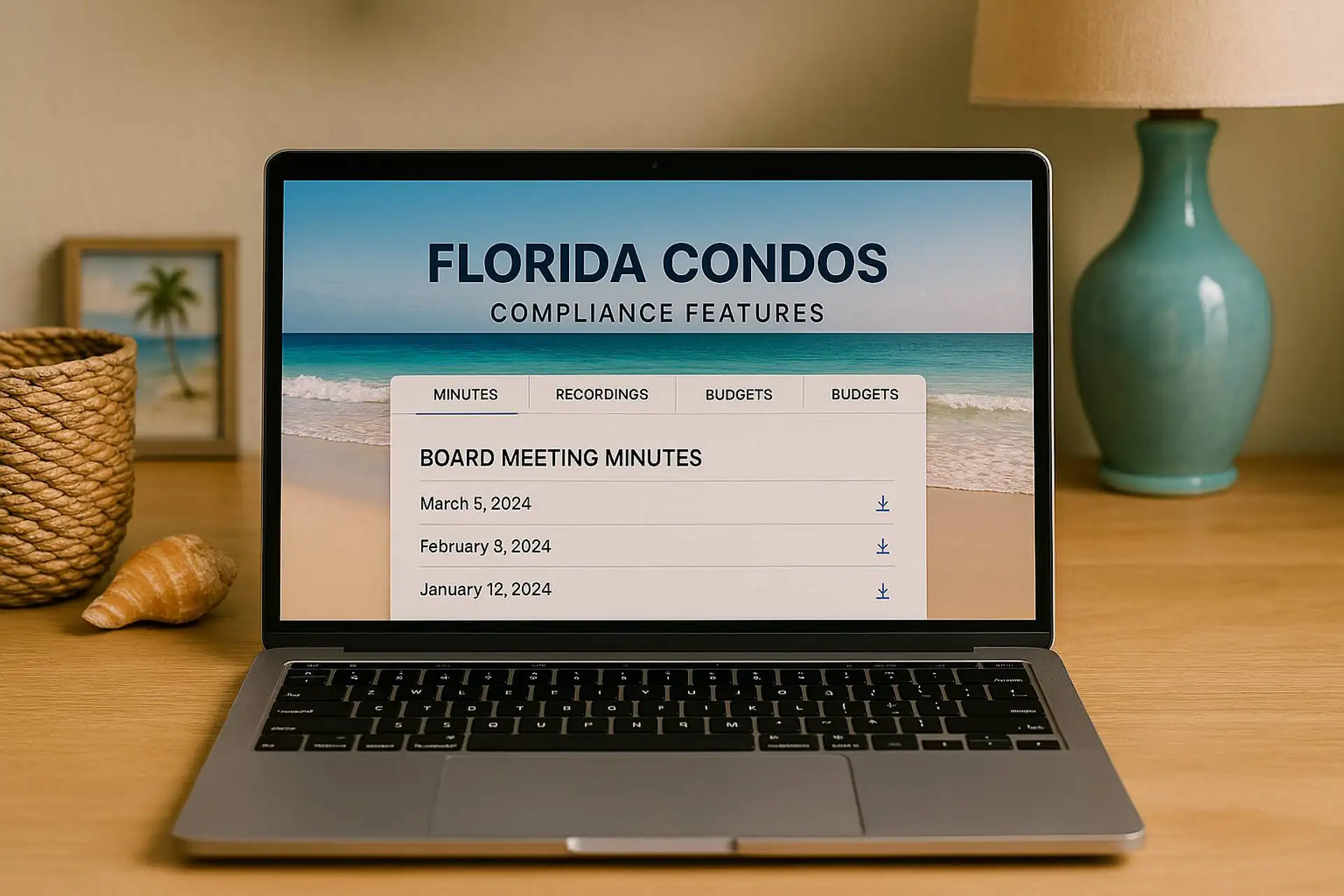
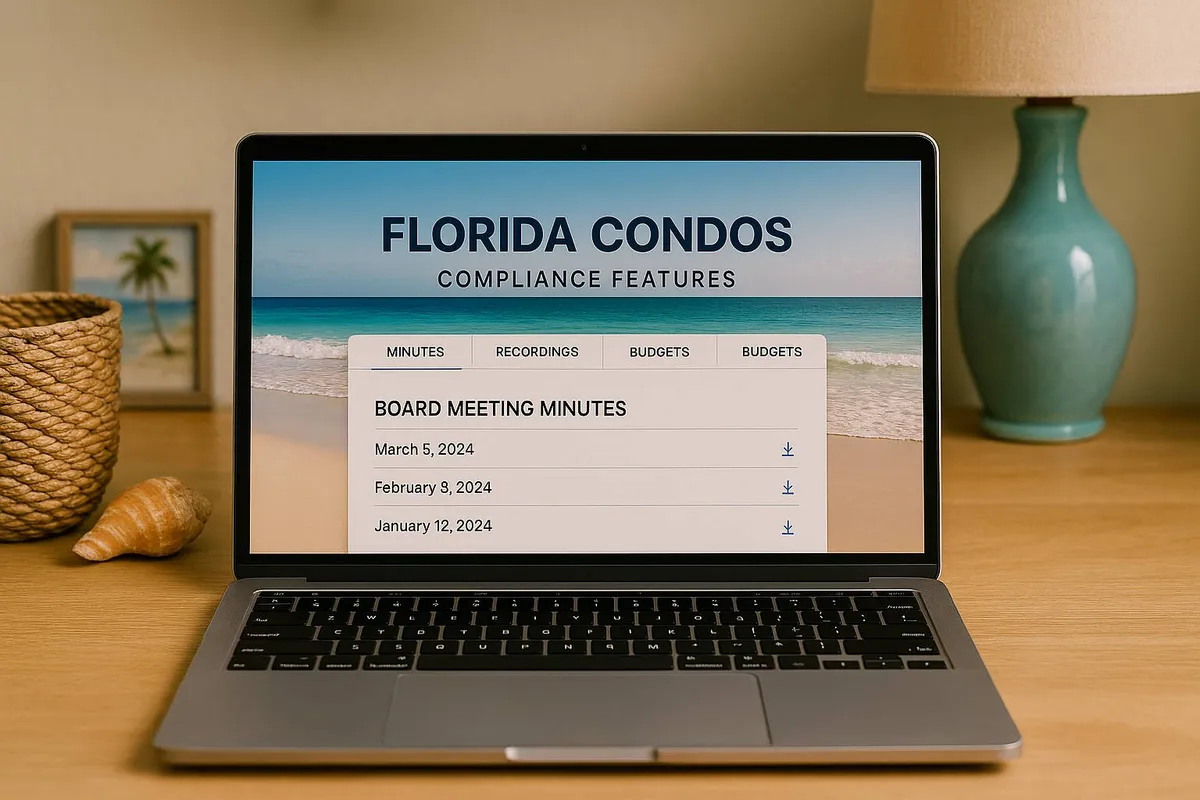
As of now, Florida Statute 718.111(12)(g) requires condominium associations with 150 or more units to maintain a website or portal where owners can access official records.
This platform must be:
- Owned or operated by the association
- Publicly accessible to owners
- Capable of hosting required documents for at least 12 months
Boards managing large communities are already required to comply with this digital transparency standard.
“Associations with 150+ units must maintain a website and post official records including notices, minutes, and financials.”
— Florida DBPR Official Records Guide (2024)
What HB 913 Changes in 2026
Here’s where things get urgent.
Beginning January 1, 2026, the 150-unit rule is eliminated.
Under HB 913, every Florida condo association—even a 10-unit building—must:
- Provide digital access to all official records
- Post meeting minutes and recordings on time
- Maintain a rolling 12-month archive
- Eliminate barriers to owner access
⚠️ This means your board must act in 2025 to prepare.
Waiting until the last minute invites non-compliance, DBPR complaints, and unnecessary stress.
“HB 913 removes the unit threshold and applies digital transparency rules to all Florida condo associations, effective January 1, 2026.”
— Florida Senate Committee Report on HB 913
What Documents Must Be Posted
Whether you’re already subject to the law (150+ units) or soon will be (everyone), your website must provide access to:
🗂 Governing Documents
- Articles of incorporation
- Bylaws
- Declaration of condominium
- Rules and regulations
📅 Meeting Records
- Meeting notices and agendas
- Approved minutes (posted within 30 days)
- Virtual meeting recordings (if applicable)
💰 Financials
- Annual budgets
- Reserve funding schedules
- Special assessments
- Year-end financial statements
📋 Board Information
- Board member names and contact
- Certifications and disclosures
- Contracts and bids
All documents must remain publicly accessible for at least 12 months.
How to Build a Compliant Condo Website
✅ Use a Compliance-First Platform
Avoid DIY setups like Google Drive, Squarespace, or password-protected blogs.
Instead, use a portal that:
- Timestamps uploads
- Logs who posted what
- Provides audit trails
- Is designed for Florida Statute 718 and HB 913 compliance
📁 Structure by Category and Date
Organize files clearly:
/minutes/2025-05-12-board-meeting.pdf/videos/2025-06-14-budget-meeting.mp4/notices/2025-07-01-agenda-annual.pdf
Use consistent naming and timestamp conventions.
🔓 Enable Public Access by Default
Required documents must be viewable by any unit owner without:
- Logins
- Passwords
- Special permissions
This is non-negotiable under both current and upcoming laws.
📘 Want a quick way to check if your website passes?
👉 Download the HB 913 Compliance Matrix →
Final Thoughts
Many small boards still believe, “We’re too small to need a website.”
But the law is changing, and DBPR scrutiny is increasing.
Starting January 1, 2026, your board will need:
- A structured document archive
- Timely posting workflows
- Digital access for every owner
- Proof of compliance on demand
Boards that adopt these standards now:
- Build trust
- Avoid fines
- Save time
- Eliminate legal exposure
👉 Schedule a Demo →
We’ll show you how to get compliant in minutes — not months.
Your website isn’t just a formality. It’s your board’s public record.